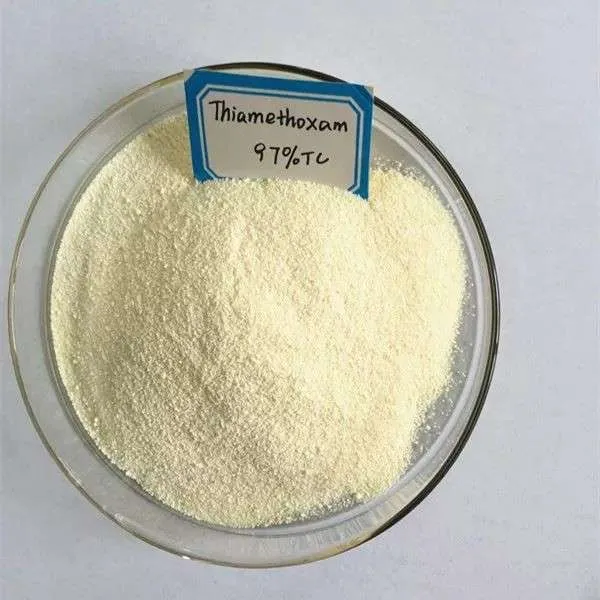
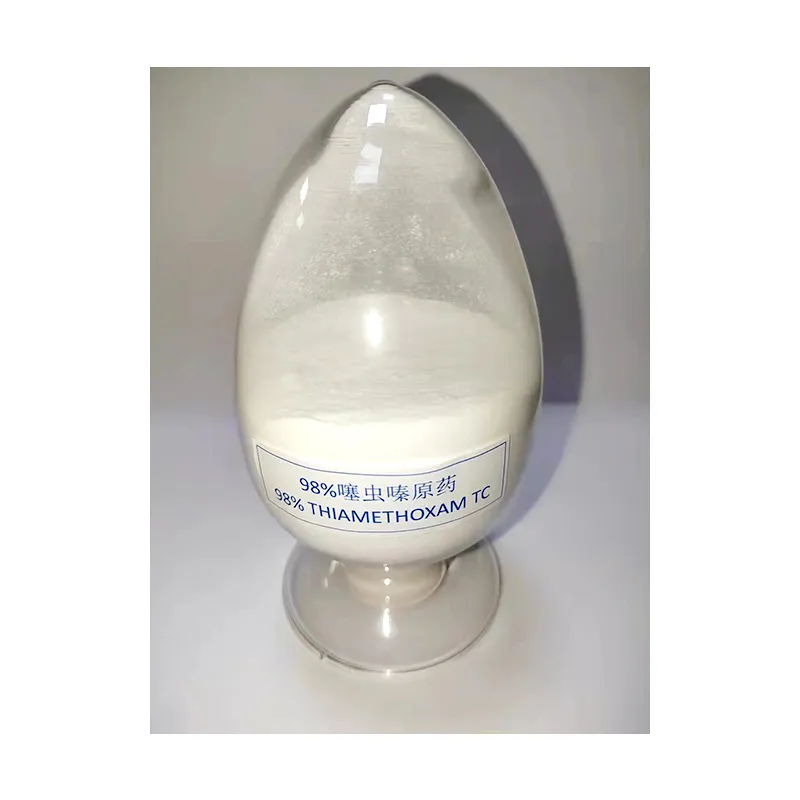
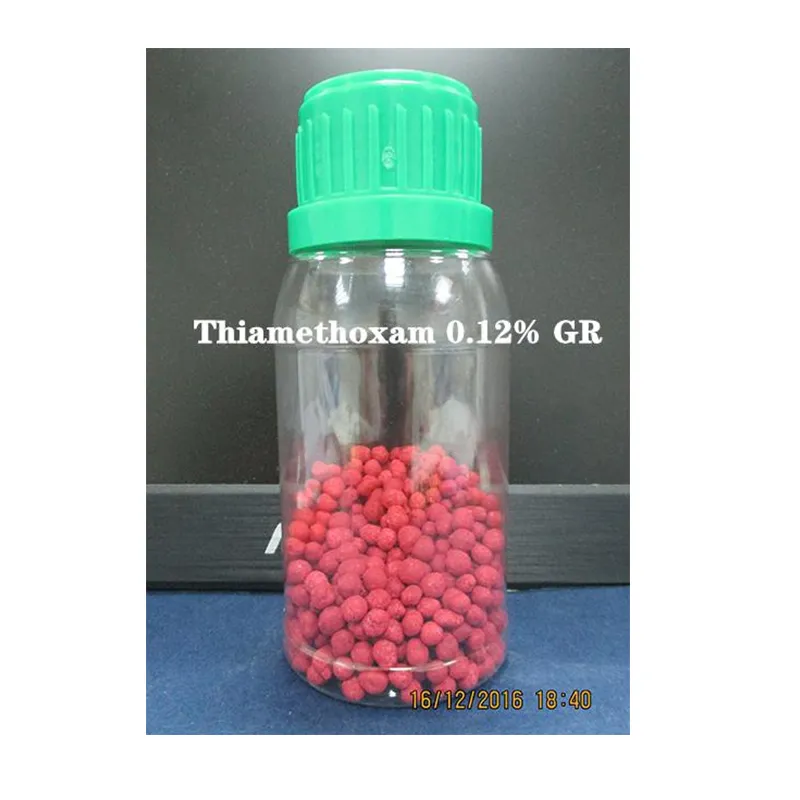
Thiamethoxam is a neonicotinoid insecticide widely used in agriculture. As the active ingredient in various products, it helps control sucking and chewing insects that feed on roots, leaves, and other plant tissues.
Melting point |
139.1 °C |
Boiling point |
485.8 ± 55.0 °C (Predicted) |
Density |
1.71 ± 0.1 g/cm³ (Predicted) |
Vapor pressure |
6.6 × 10⁻⁹ Pa (25 °C) |
Storage temperature |
Inert atmosphere, 2–8 °C |
Solubility |
DMSO: 250 mg/mL (857.02 mM) |
Water solubility |
4.1 × 10³ mg/L (25 °C) |
Form |
Solid |
pKa |
0.99 ± 0.10 (Predicted) |
Color |
Off-white to yellow |
Hazard codes |
|
Risk statements |
|
Safety statements |
|
RIDADR |
UN 3077 9 / PGIII |
WGK (Germany) |
2 |
HS code |
29341000 |
Hazardous substances data |
|
Toxicity |
LD50 in rats (mg/kg): 1563 (oral), >2000 (dermal); LD50 in bobwhite quail and mallard duck (mg/kg): 1552 and 576 (oral). LC50 (96 hr) in rainbow trout and bluegill (mg/L): >100 and >114 (Senn). |
Chemical properties |
Off-white to pale yellow solid |
Uses |
Thiamethoxam is a broad-spectrum insecticide active against a wide range of sucking and chewing insect pests following foliar, soil, or seed treatment. |
Definition |
ChEBI: Thiamethoxam is an oxadiazane bearing tetrahydro-N-nitro-4H-1,3,5-oxadiazin-4-imine, substituted with (2-chloro-1,3-thiazol-5-yl)methyl and methyl groups at positions 3 and 5, respectively. It acts as an antifeedant, a carcinogenic agent, an environmental contaminant, a xenobiotic, and a neonicotinoid insecticide. It is an oxadiazane, a member of 1,3-thiazoles, an organochlorine compound, and a 2-nitroguanidine derivative. It is derived from 2-chlorothiazole. |
Application |
Thiamethoxam is a neonicotinoid insecticide used widely. It is the active ingredient in a variety of agricultural products used to control sucking and chewing insects feeding on roots, leaves, and other plant tissues. Agricultural uses include soil and seed treatments, as well as leaf spraying for most row and vegetable crops such as corn, soybeans, snap beans, and potatoes. It is also used to control insects in livestock pens, poultry houses, sod farms, golf courses, lawns, household plants, and tree nurseries. It was first registered by the U.S. Environmental Protection Agency in 1999. Reports indicate that exposure to neonicotinoid pesticides can cause honeybees to have difficulty returning home after foraging, and bumblebee colonies may grow poorly and produce fewer queens. |
Flammability and explosibility |
Flammable |
Metabolic pathway |
All information on thiamethoxam is taken from a summary of the proceedings of a meeting published by the manufacturer. Full experimental details are not provided in the report, and the identities of metabolites are not disclosed (Novartis, 1997). |
Degradation |
Thiamethoxam is hydrolytically stable at pH 5 (half-life approximately 200–300 days). The compound is more labile at pH 9, where the half-life is a few days. It is rapidly photodegraded, with a half-life of approximately 1 hour. In aquatic systems, degradation occurs under alkaline conditions; the insecticide is rapidly photodegraded but is not readily biodegradable (Novartis, 1997). |
Mode of action |
Thiamethoxam interferes with nicotinic acetylcholine receptors in the insect nervous system, which are essential for proper nerve function. Within hours of contact or ingestion, insects stop feeding. Death usually occurs within 24 to 48 hours.
|