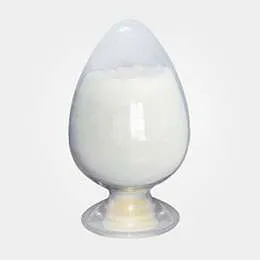
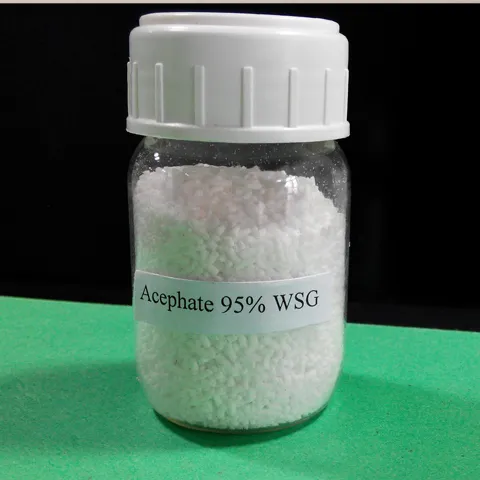
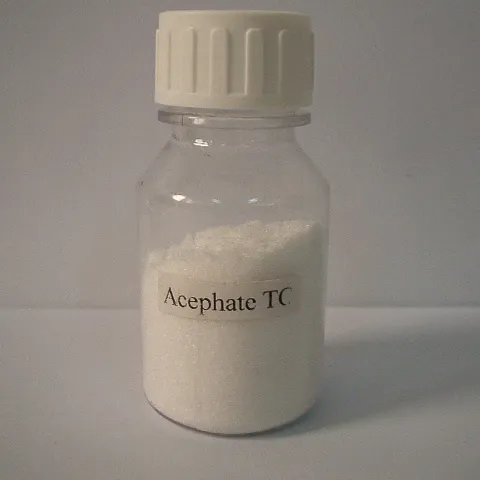
Acephate (also known as Orthene) is an organophosphate foliar insecticide for controlling leaf miners, caterpillars, sawflies and thrips in crops, and aphids in vegetables and horticulture.
|
Melting point |
93°C |
|
Density |
1.35 |
|
Vapor pressure |
2.26 x 10⁻⁴ Pa (24°C) |
|
Flash point |
2°C |
|
Storage temperature |
Approx. 4°C |
|
Solubility |
Chloroform: soluble; DMSO: soluble; Water: soluble |
|
pKa |
11.00 ± 0.46 (Predicted) |
|
Physical form |
Solid |
|
Color |
White to yellow |
|
Water solubility |
Readily soluble |
|
GHS symbol |
|
|
Signal word |
Warning |
|
Hazard statements |
H302+H312 |
|
Hazard codes |
Xn, F |
|
RIDADR |
UN1648 3/PG 2 |
|
HS Code |
29299040 |

Acephate (also known as Orthene) is an organophosphate foliar insecticide used for the control of leaf miners, caterpillars, sawflies, and thrips in crops, and aphids in vegetables and horticulture. It was among the 10 most important organophosphate insecticides in the 1990s and is still widely used today.
It works by inhibiting the activity of acetylcholinesterase (AChE) after being metabolically converted to methamidophos. As it cannot be converted to methamidophos, it is considered not to have an effect on animals and humans.
Contact and systemic insecticide for the control of sucking and chewing insects in cotton, ornamentals, forestry, tobacco, fruits, vegetables, and other crops.
Acephate is an organophosphate foliar spray insecticide with moderate persistence and residual systemic activity. It is both a contact and systemic insecticide and is highly effective against a wide range of crop pests, including alfalfa looper, aphids, armyworms, bagworms, bean leaf beetle, bean leaf roller, blackgrass bugs, bollworm, budworm, and cabbage looper.
Acephate is used to control a broad range of sucking and chewing insects across many crops.