Originally used to control grass weeds in rubber plantations, the product helps enable rubber tapping one year earlier and increases the production capacity of older rubber trees.
CAS: 1071-83-6
Molecular Formula (MF): C3H8NO5P
Molecular Weight (MW): 169.07
Melting point |
230 °C (decomposition) (lit.) |
Boiling point |
465.8 ± 55.0 °C (Predicted) |
Density |
1.74 |
Fp |
230 °C |
Storage temperature |
Approximately 4 °C |
Solubility |
DMSO: slightly soluble; PBS (pH 7.2): slightly soluble |
Physical form |
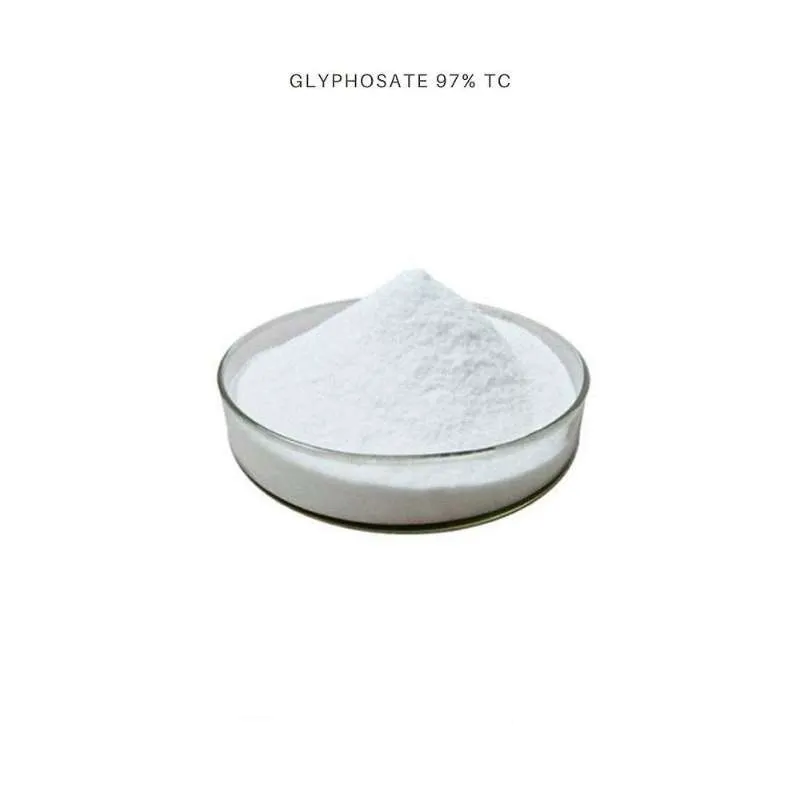
Solid |
pKa |
1.22 ± 0.10 (Predicted) |
Color |
White to off-white |
Odor |
Odorless |
Water solubility |
1.2 g/100 mL |
Decomposition |
230 °C |
Stability: |
Stable. Incompatible with metals, strong oxidizing agents, and strong bases. May be light sensitive. |
Hazard Codes |
|
HS Code |
29319090 |
It was originally used to control grass weeds in rubber plantations. It can allow earlier rubber tapping (by one year) and increase the production capacity of older rubber trees. It has since been gradually extended to forestry, orchards, mulberry fields, tea plantations, and rice, wheat, and rape rotation lands. Different weed species show different sensitivity to glyphosate, and therefore the application rate also varies. For example, for weeds such as barnyardgrass, green bristlegrass, Alopecurus aequalis, Eleusine indica, crabgrass, cleavers, and other annual weeds, the rate calculated based on the amount of active ingredient should be 6–10.5 g/100 m². For Plantaginis semen (seed plantain), horseweed, and dayflower, the active ingredient rate should be 11.4–15 g/100 m². For cogon, Panicum repens, and reeds, the active ingredient rate can be 18–30 g/100 m²; generally, the required water volume is 3–4.5 kg. Apply as a direct, even spray to the weed stems and leaves.
It is a non-selective, post-emergent herbicide with a short residual life. It can be used to control perennial weeds with deep roots, annual and biennial weeds, sedges, and broadleaf weeds.
Glyphosate is an organophosphorus herbicide. Its herbicidal properties were identified by D. D. Baird (USA) in 1971. By the 1980s, it had become an important species among world herbicides.