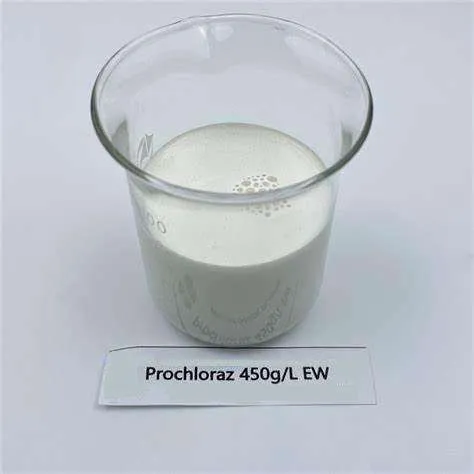
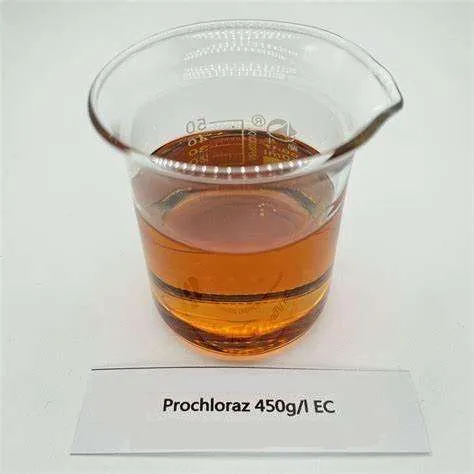
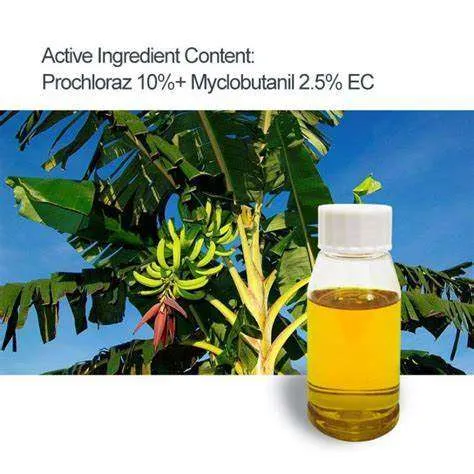
Prochloraz is an imidazole fungicide widely used in gardening and agriculture across Europe, Australia, Asia, and South America.
CAS No.: 67747-09-5
Molecular Formula: C15H16Cl3N3O2
Molecular Weight: 376.67
Melting point |
46–49 °C |
Boiling point |
360 °C |
Density |
1.405 |
Vapor pressure |
1.5 × 10⁻⁴ Pa (25 °C) |
Refractive index |
1.6490 (estimate) |
Flash point |
2 °C |
Storage temperature |
Keep sealed in a dry place at 2–8 °C |
Solubility |
DMF: 30 mg/mL; DMSO: 30 mg/mL; Ethanol: 30 mg/mL; Ethanol:PBS (pH 7.2) (1:1): 0.5 mg/mL |
pKa |
3.8 (weak base) |
Water solubility |
34.4 mg/L (25 °C) |
Form |
Solid |
Color |
White to light yellow to light orange |
Symbol (GHS) |
|
Signal word |
Warning |
Hazard codes |
Xn; N,N, Xn, F |
RIDADR |
UN 3077 |
Hazard class |
9 |
Packing group |
III |
HS code |
29332900 |


Prochloraz is an imidazole fungicide widely used in Europe, Australia, Asia, and South America in gardening and agriculture. It is used on wheat, barley, mushrooms, and cherries, as well as on turf for golf courses and in flower production. For example, in Ecuador, roses are treated with prochloraz prior to export to the USA. Prochloraz was first evaluated by JMPR in 1983 for residues and toxicology, and subsequently six additional residue reviews were conducted between 1985 and 1992. Under the CCPR Periodic Review Programme, the toxicology was re-evaluated in 2001. In 2004, a periodic review of the residue and analytical aspects of prochloraz was conducted.
Prochloraz is a fungicide active against a wide range of diseases affecting cereals, field crops, fruit, and many other crops. It can be used to control pests including anthracnose, dothiorella complex, stem-end rot, and eyespot. It can be applied to fruits and fields, including field crops; mushrooms; turf; avocados; mangoes; and cereals such as wheat, barley, and winter rye, as well as winter oilseed rape.