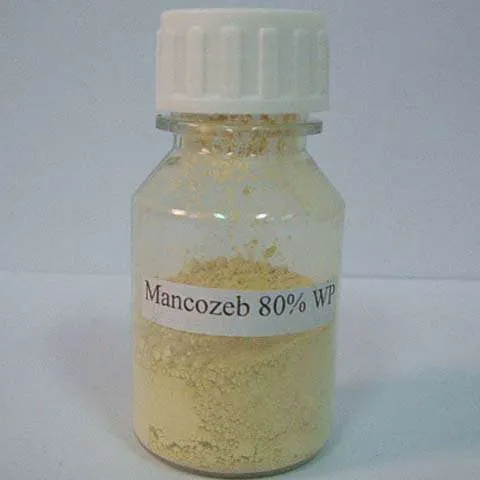
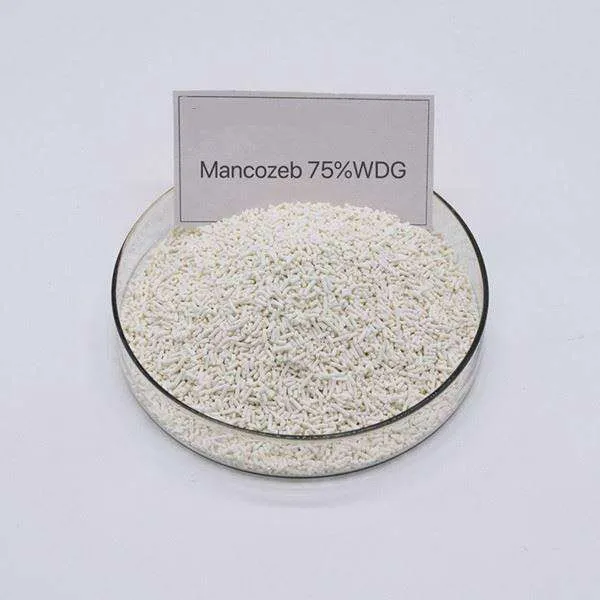
Mancozeb is a fungicide from the ethylene-bis-dit-hiocarbamate group. Rondo-M contains mancozeb together with pyrifenox, providing a combined formulation for crop protection applications.
CAS No.: 8018-01-7
Molecular Formula: C4H8MnN2S4Zn
Molecular Weight: 332.71
Melting point |
192–194 °C |
Density |
1.92 g/cm³ |
Vapor pressure |
Negligible at 20 °C (reference value) |
Flash point |
138 °C |
Storage temperature |
APPROX. 4 °C |
Solubility |
DMSO: 1 mg/mL (1.51 mM); Water: < 0.1 mg/mL (insoluble) |
Form |
Solid: particulate / powder |
Water solubility |
6–20 mg/L (20 °C) |
Colour |
Light yellow to yellow |
Symbol (GHS) |
|
Signal word |
Danger |
Hazard codes |
Xi, N, Xn |
Hazard class |
9 |
Packing group |
III |
HS Code |
29309090 |


Mancozeb is a fungicide of the ethylene-bis-dit-hiocarbamate group. It is used in products such as Rondo-M with pyrifenox. Occupational exposure occurs mainly among agricultural workers, including vineyard workers and florists.
Uses
Mancozeb is a mixture of Maneb (M163500) and Zineb, a manganese and zinc (1:1) complex mixture with the ethylene bis(dithiocarbamate) anionic ligand. Mancozeb is a foliar fungicide used to protect crops in agriculture. Mancozeb provides broader and more effective fungicidal activity than either of its components used alone. It also significantly enhances copper activity against several bacterioses.
Used as a foliar or seed treatment, Mancozeb helps control a wide variety of pathogens in many field crops, fruits, ornamentals, and vegetables. As a contact fungicide, it provides protection against a broad range of fungal diseases (including rots, leaf spot, blight, rust, downy mildew, scab, etc.) in field crops, fruits, vines, vegetables, ornamentals, potatoes, turf, berries, rice, citrus, and cereals. Mancozeb is a mixture containing zineb and maneb as active ingredients. It is used to control fungal diseases including potato blight, leaf spot, scab (on apples and pears), and rust (on roses). It is applied to fruits, vegetables, nuts, and field crops, and more. It is also used as a seed treatment for cotton, potatoes, corn, safflower, sorghum, peanuts, tomatoes, flax, and cereal grains.